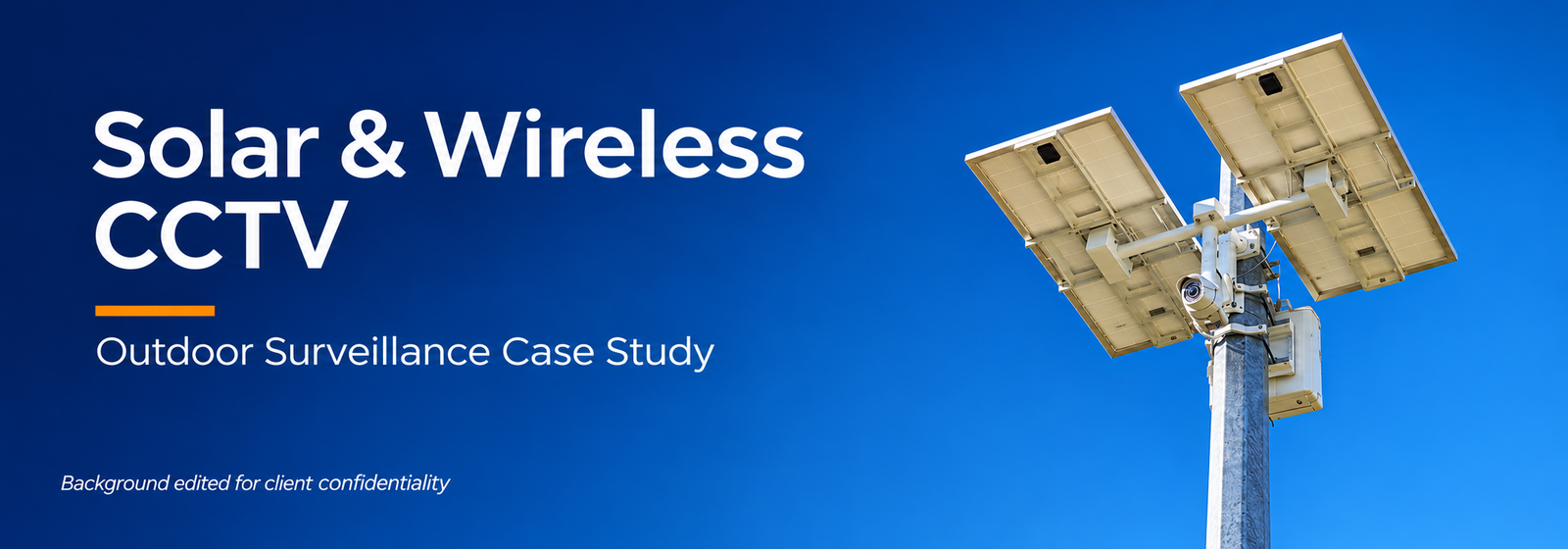
Providing CCTV coverage across an outdoor facility can be challenging when suitable power and fixed network connections are not available where cameras are needed.
SecurityEyes Australia acted as the principal contractor for this Queensland project, independently designing and delivering a hybrid surveillance solution that combined solar-powered CCTV, wireless connectivity and mobile network access.
The project demonstrates how a site-specific design can extend surveillance capabilities while reducing reliance on extensive new cabling infrastructure.
Client and site-identifying details have been withheld for confidentiality. Selected images have been edited to remove identifying backgrounds.
The Challenge: Surveillance Beyond Conventional Infrastructure
The facility required improved visibility across dispersed outdoor areas. Conventional wired CCTV installation was constrained by limited access to power and fixed network infrastructure at some proposed monitoring locations.
The design needed to address several practical requirements:
- Supporting cameras in areas without a suitable mains power connection.
- Connecting dispersed monitoring points.
- Enabling authorised remote access without relying on a fixed internet service.
- Considering outdoor conditions, equipment protection and ongoing maintenance.
Rather than applying a standard camera package, SecurityEyes developed an approach around the facility’s infrastructure constraints and operational needs.
Independently Designed and Delivered by SecurityEyes
As the principal contractor, SecurityEyes took responsibility for the surveillance solution’s design and delivery.
Our scope brought together system design, equipment selection, installation, configuration and commissioning. Power, connectivity, video surveillance and remote access were considered together so that the individual technologies could operate as a coordinated system.
The resulting hybrid design combined solar-powered surveillance at suitable locations with wireless networking and mobile connectivity.
Solar-Powered CCTV for Locations Without Mains Power
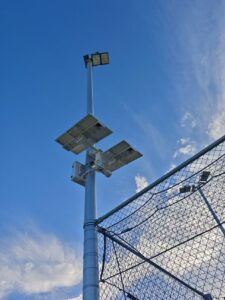
Solar-powered CCTV equipment was deployed where a conventional electrical connection was not available.
Integrated solar panels and battery storage supported camera operation without requiring a new mains connection at those locations. This approach reduced reliance on electrical trenching and cabling to extend surveillance into the outdoor areas.
Solar CCTV still requires site-specific assessment. Available sunlight, shading, equipment power demand, battery capacity and maintenance access all influence whether a proposed installation is suitable.
For this project, solar power formed part of the overall surveillance design rather than being treated as a standalone product choice.
Wireless Connectivity Between Monitoring Points
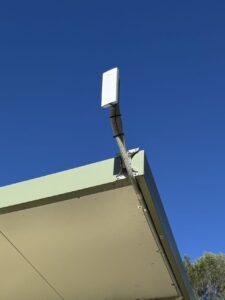
Wireless bridge technology provided network connectivity between dispersed parts of the installation.
This helped address locations where installing new data cabling would have added complexity to the project. The wireless links supported the surveillance network while reducing the need for extensive cable routes across the facility.
Wireless CCTV design requires consideration of distance, line of sight, mounting conditions and network capacity. These factors need to be assessed alongside the cameras and recording requirements.
SecurityEyes also provides networking and IT infrastructure solutions to support connected security systems.
Mobile Connectivity for Authorised Remote Access
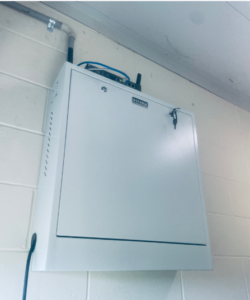
Mobile network connectivity provided a path for authorised remote access where a fixed internet service was unavailable.
This enabled the surveillance system to support remote viewing and management through the configured connection.
Remote access performance depends on factors including mobile coverage, available bandwidth and the selected service. Access permissions and network configuration also need to reflect the organisation’s requirements.
Outdoor Video Surveillance and Equipment Protection
The surveillance equipment was selected and configured to support the facility’s outdoor monitoring requirements.
Alongside camera coverage and connectivity, the design considered physical equipment protection and access for maintenance. Detailed camera locations, network arrangements and equipment protection measures are omitted from this case study to preserve client confidentiality.
The emphasis was on delivering a practical system that the client could operate and support after installation.
What the Project Delivered
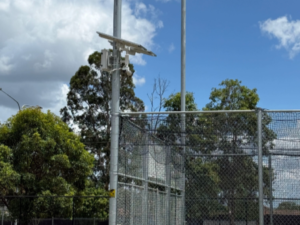
The completed installation provided an operational surveillance network across the selected outdoor areas, including:
- Solar-powered CCTV at locations without suitable mains power.
- Wireless connectivity between dispersed monitoring points.
- Mobile network access for authorised remote viewing and management.
- Reduced reliance on extensive new power and data cabling.
- An integrated design delivered by one principal contractor.
These are the capabilities delivered by the project. This case study does not claim a measured reduction in incidents or a quantified cost saving.
Applying This Approach to Other Outdoor Sites
A hybrid surveillance approach may be worth assessing for recreation facilities, commercial outdoor areas, construction sites and other locations where power or fixed network access is limited.
Each site requires its own design. Solar availability, mobile coverage, wireless connectivity, recording requirements and maintenance arrangements should be evaluated before equipment is selected.
SecurityEyes designs and installs commercial CCTV and surveillance systems, including new installations, upgrades and solutions for challenging site conditions.
Planning CCTV for a Site With Limited Power or Connectivity?
SecurityEyes Australia can help assess the site, identify infrastructure constraints and develop a surveillance approach suited to your operational requirements.